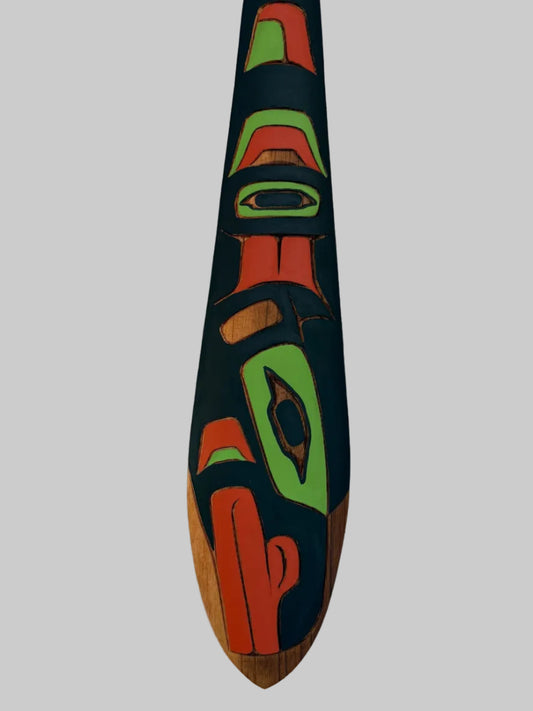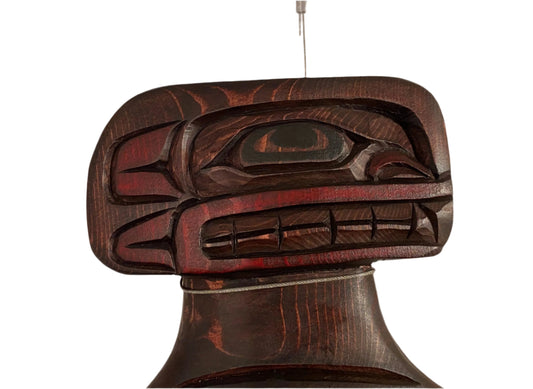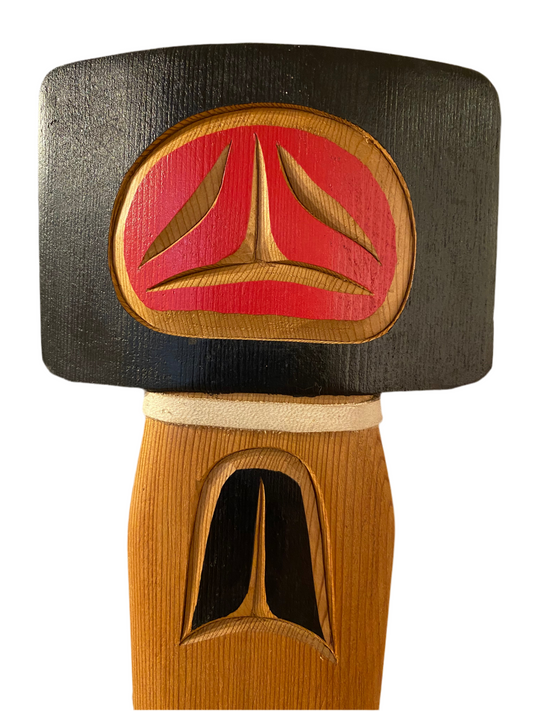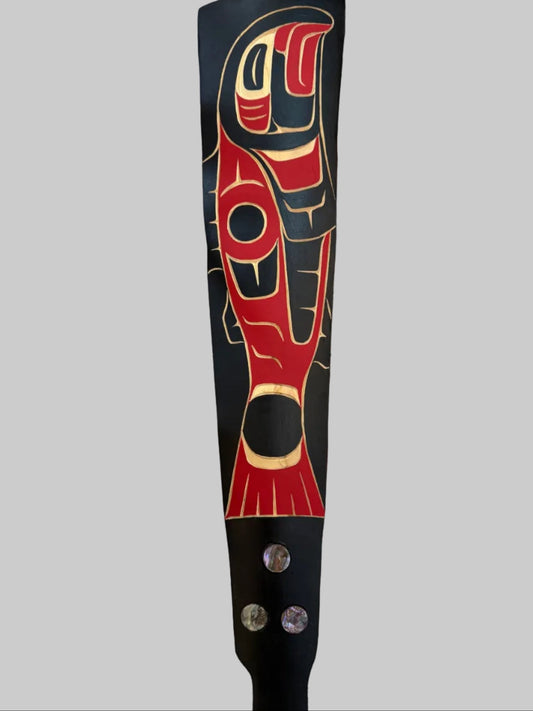
Collection: Paddles

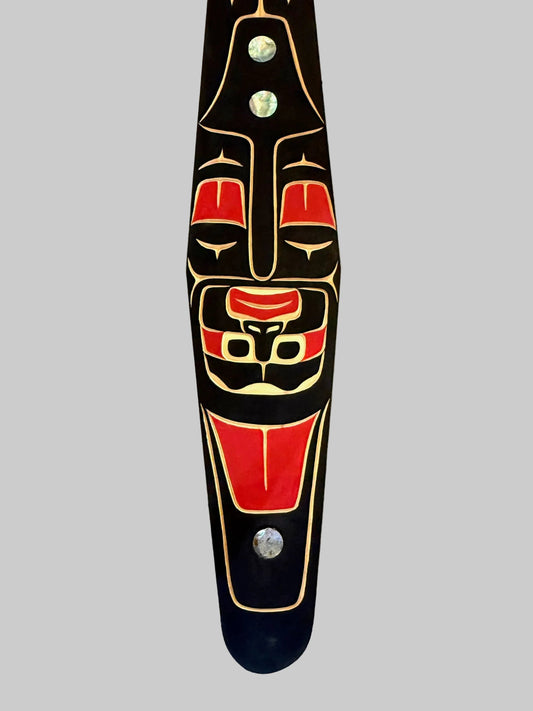
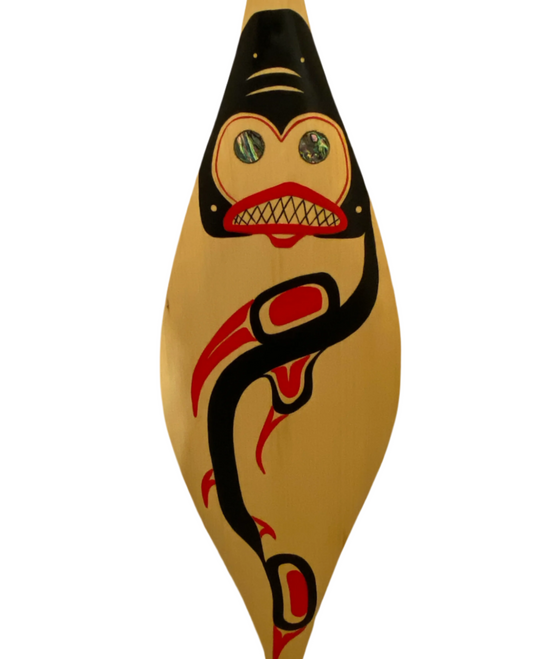
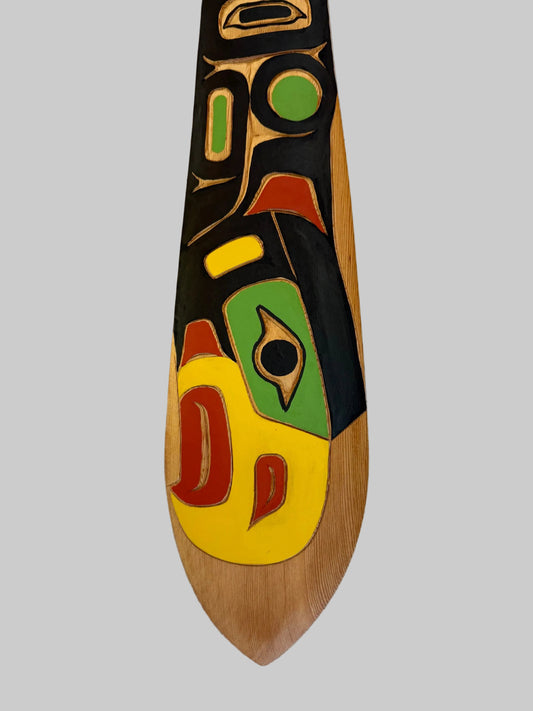
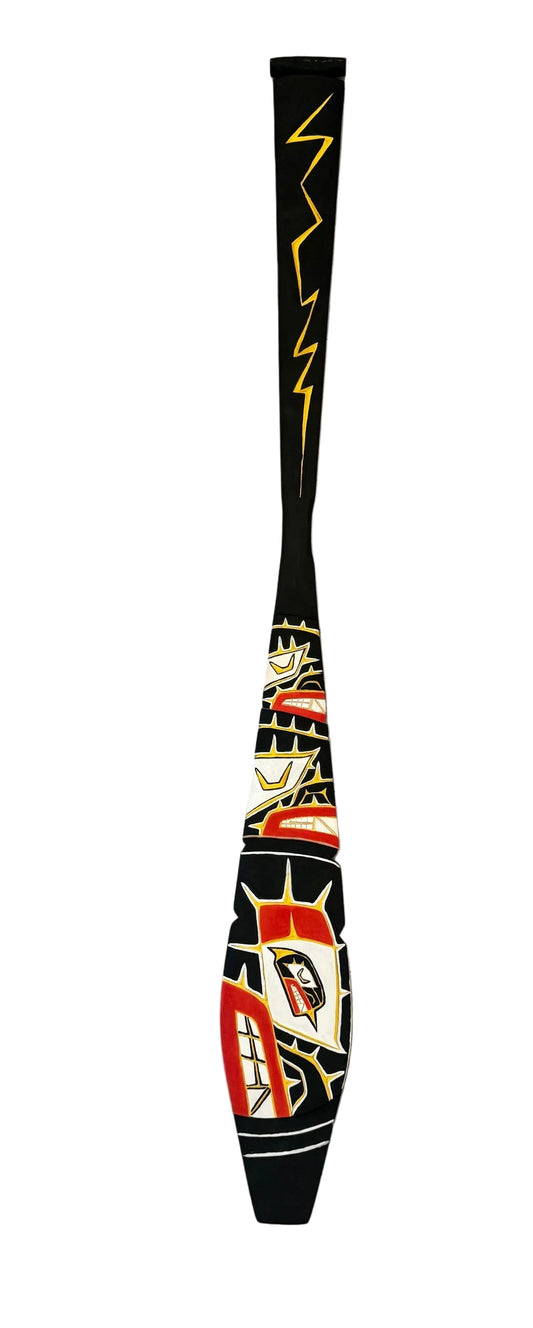
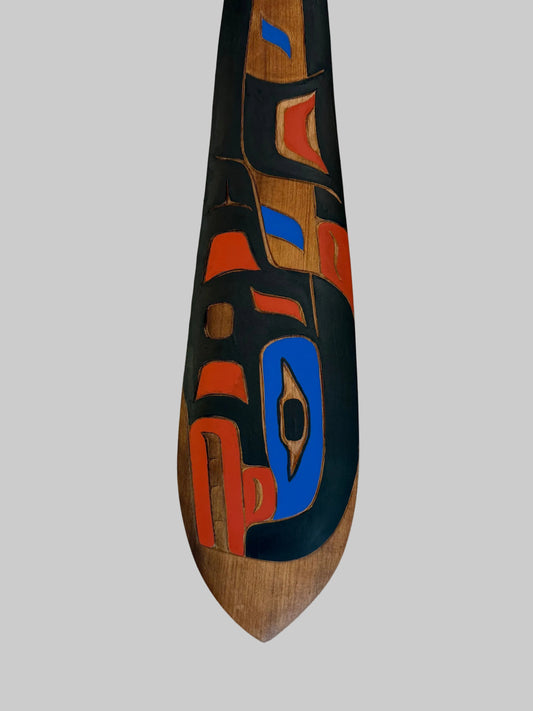
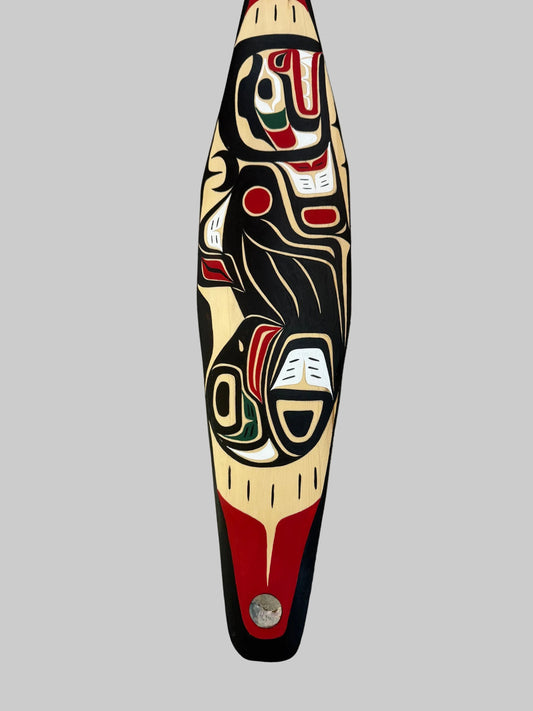
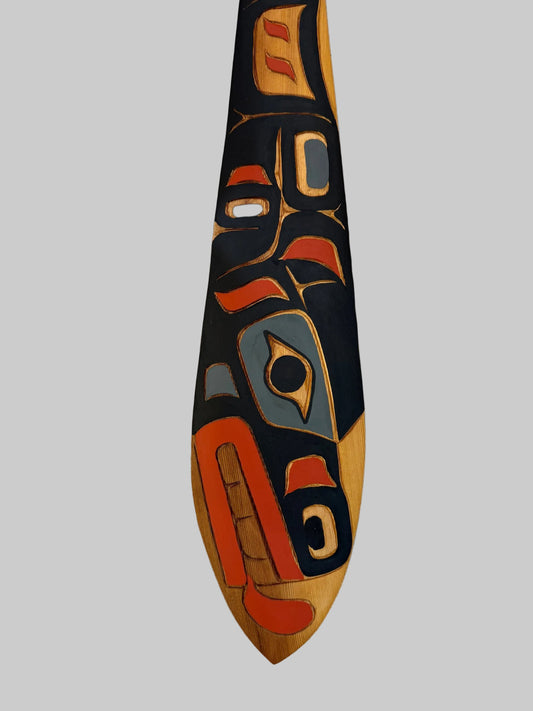
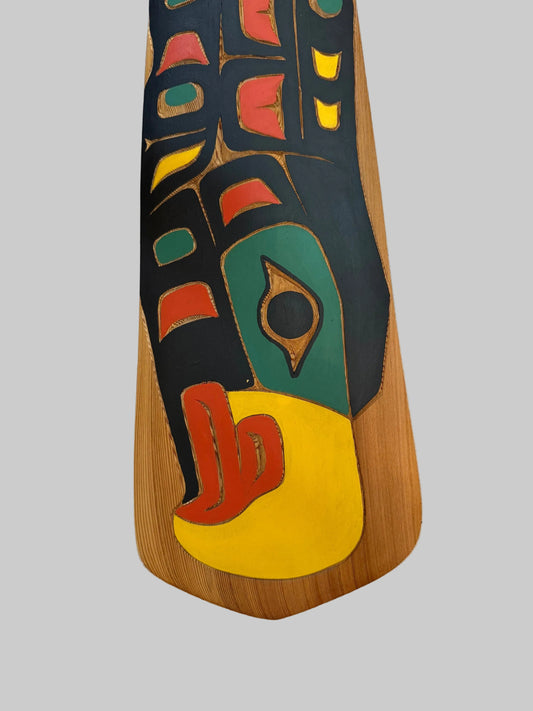
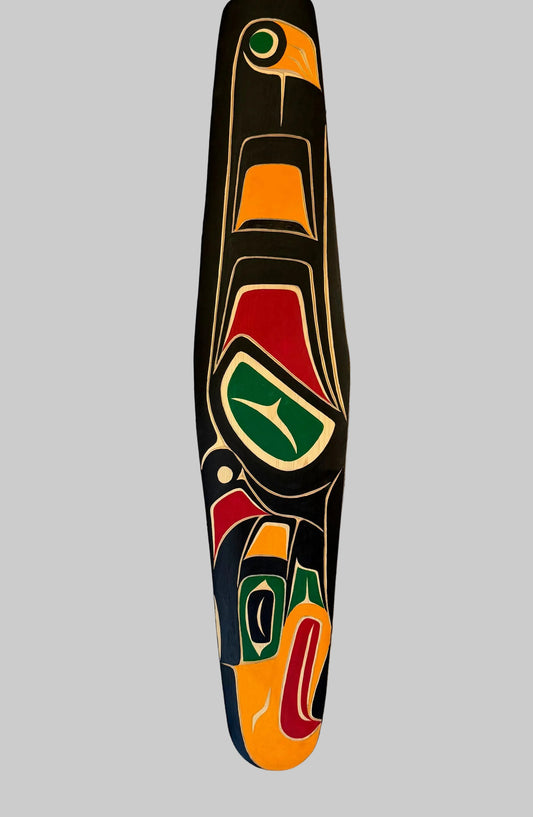
Paddles hold a deeply significant place in the culture of the Northwest Coast First Nations, serving as both indispensable tools and works of art, crafted with the same meticulous care and pride as the canoes they accompany. Historically, beautifully carved paddles guided majestic cedar canoes across the vast coastal waters of the Northwest Pacific. Beyond their practical role in navigation, they were integral to ceremonial dances, wielded as powerful weapons, and revered as enduring symbols of travel, the sea, and the journey of life itself.
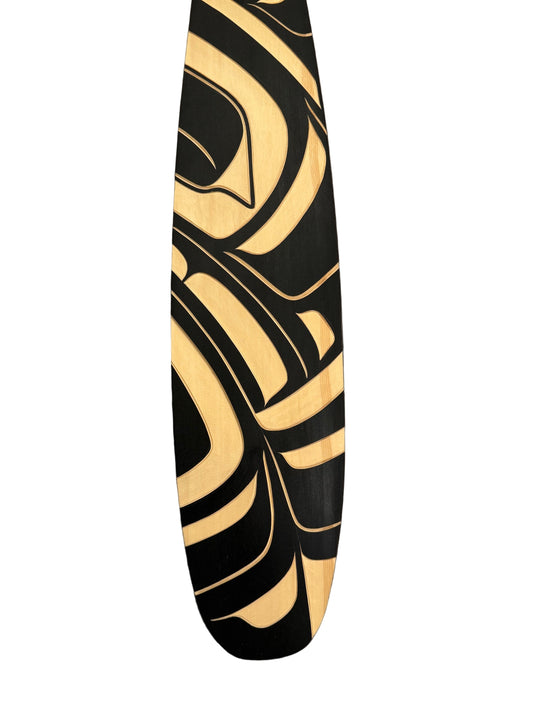
In contemporary times, West Coast Native paddles are often lavishly adorned with intricate carvings and vibrant paintings that embody traditional stories, symbolic imagery, and designs unique to each nation’s heritage. Some are further enhanced with inlays of abalone, mother of pearl, or other culturally meaningful materials. While still functional, modern paddles are most often created as exceptional artistic masterpieces. Their shapes and sizes are customized to the paddler, reflecting differences in technique—women tending toward a faster, splashier stroke and men favoring deeper, more forceful movements. The design also varies according to purpose, whether for paddling or steering, and for navigating ocean or river waters. Broad paddles positioned at the stern excel in steering, while sharp-tipped paddles serve diverse purposes: hunting, spearing fish, entering water silently, securing a canoe, or acting as formidable weapons in times of conflict.
-
Chief Paddle
Vendor:Allen SpeckRegular price $1,975.00 CADRegular priceUnit price per -
Ditidaht Shark Paddle
Vendor:Russel (Floyd) TateRegular price $950.00 CADRegular priceUnit price per -

 Sold out
Eagle Paddle
Vendor:Trevor AngusRegular price $3,200.00 CADRegular priceUnit price per -
Eagle Paddle
Vendor:Tim AlfredRegular price $1,595.00 CADRegular priceUnit price per -
Killer Whale Paddle
Vendor:Ben IsaacRegular price $1,575.00 CADRegular priceUnit price per -
Killer Whale Paddle
Vendor:Tim AlfredRegular price $1,595.00 CADRegular priceUnit price per -
Killer Whale Paddle
Vendor:Allen SpeckRegular price $1,975.00 CADRegular priceUnit price per -
Kwakiutl Bear Paddle
Vendor:Tim AlfredRegular price $1,595.00 CADRegular priceUnit price per -
Kwakiutl Eagles Paddle
Vendor:Tim AlfredRegular price $1,950.00 CADRegular priceUnit price per -
Kwakiutl Raven Paddle
Vendor:Tim AlfredRegular price $1,595.00 CADRegular priceUnit price per -
Orca Paddle
Vendor:Jackson RobertsonRegular price $1,500.00 CADRegular priceUnit price per -
Raven Steals the Light Paddle
Vendor:Sam BakerRegular price $575.00 CADRegular priceUnit price per -
Salmon Paddle
Vendor:Allen SpeckRegular price $1,975.00 CADRegular priceUnit price per -
Thunderbird Paddle
Vendor:Allen SpeckRegular price $1,975.00 CADRegular priceUnit price per